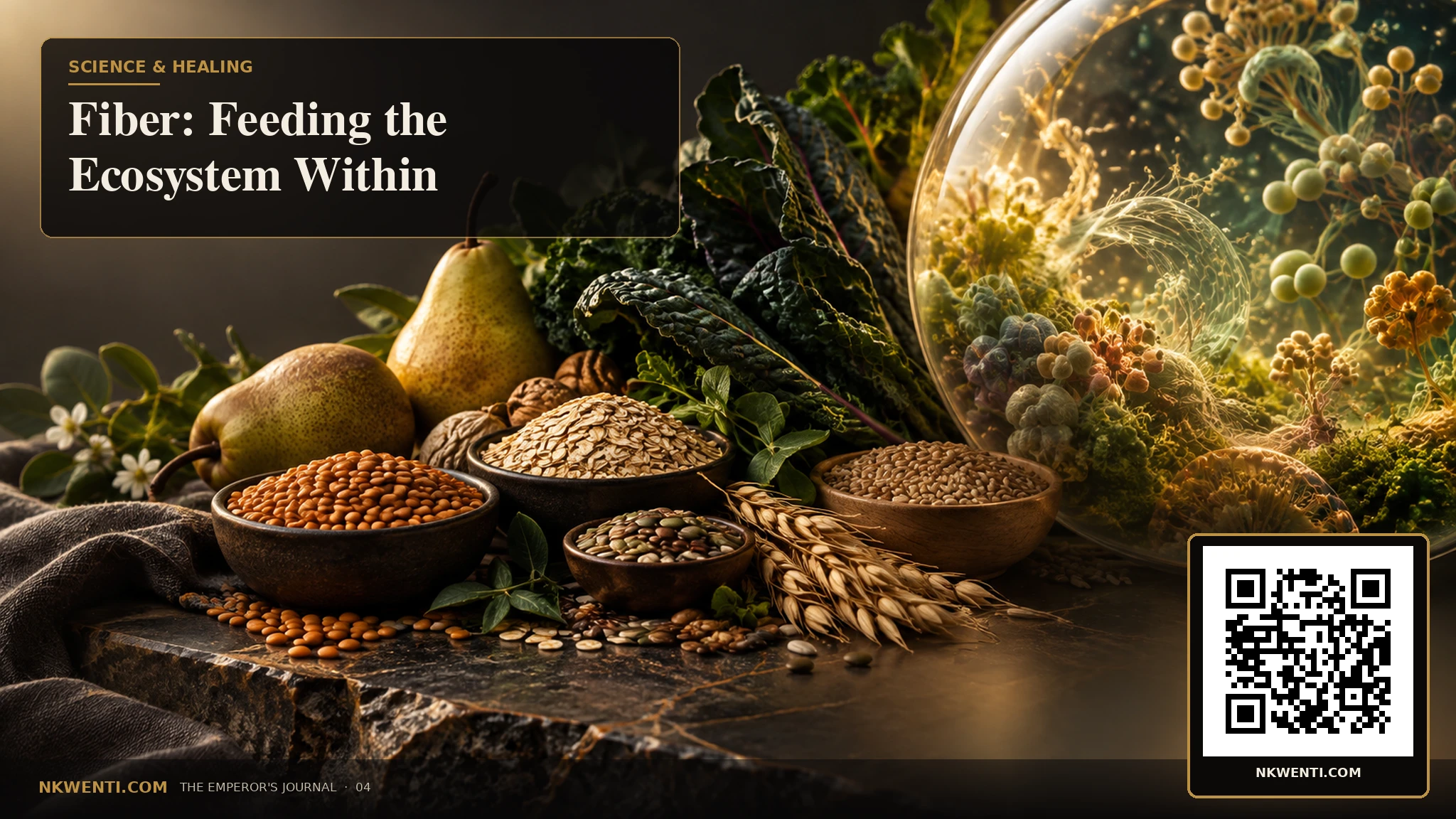
Fiber: Feeding the Ecosystem Within
Dietary fiber is not one substance, and the microbiome is not one organ. Their relationship is diverse, local, and more nuanced than wellness slogans suggest.
We often speak of fiber as if it were a single ingredient with a single job. In reality, the word gathers together many carbohydrate structures that human digestive enzymes do not fully break down. Their physical properties differ. Their effects differ. Some influence stool bulk and water retention. Some are fermented by microbes. Some do several things at once.
The colon is not merely the end of digestion. It is an inhabited ecosystem where microbial communities interact with food residues, mucus, medicines, bile acids, and one another. When certain microbes ferment certain fibers, they can produce short-chain fatty acids and other metabolites. These compounds participate in local biology and may influence processes beyond the gut. But “fiber feeds good bacteria” is still an oversimplification: microbes compete, cooperate, adapt, and vary greatly among people.
Diversity without mythology
A varied pattern of vegetables, fruits, legumes, whole grains, nuts, and seeds supplies different fibers alongside vitamins, minerals, and plant compounds. That is not the same as claiming that one powder will “reset” a microbiome. Commercial tests may describe organisms detected in a sample, but translating a single stool snapshot into precise treatment is often more uncertain than the marketing suggests.
More fiber is also not always immediately better. A rapid increase can bring bloating, discomfort, or altered bowel habits. Fluid intake, underlying gastrointestinal conditions, medication, prior diet, and the particular fiber all matter. People with bowel strictures, active inflammatory disease, recent surgery, severe symptoms, or medically prescribed dietary restrictions need individualized guidance.
What ordinary food can do
The point is not to turn every meal into a laboratory intervention. Food creates recurring ecological conditions. A bean, an oat, a pear, or a handful of greens does not command the microbiome; it changes what is available. Across time, those changes become part of the environment in which microbes and the host negotiate.
This ecological view also protects us from exaggerated certainty. A microbial metabolite that looks promising in cells or animals is not automatically a proven human therapy. Early research can be meaningful without being ready for prescription. Good science permits wonder and restraint in the same sentence.
We do not control an ecosystem by slogan. We shape its conditions through repeated inputs.
Fiber deserves attention not because it is fashionable, but because it sits at the meeting point of food structure, digestion, microbial metabolism, and daily habit. The wisest approach is usually gradual, varied, observant, and willing to make room for individual tolerance.
Sources
Evidence-aware writing. This is not medical advice, diagnosis or treatment. References and disclosures will appear here as the science archive grows.