Immune Memory Without Myth
Immune memory is a coordinated biological capacity, not an invisible shield that is either perfectly present or completely absent.
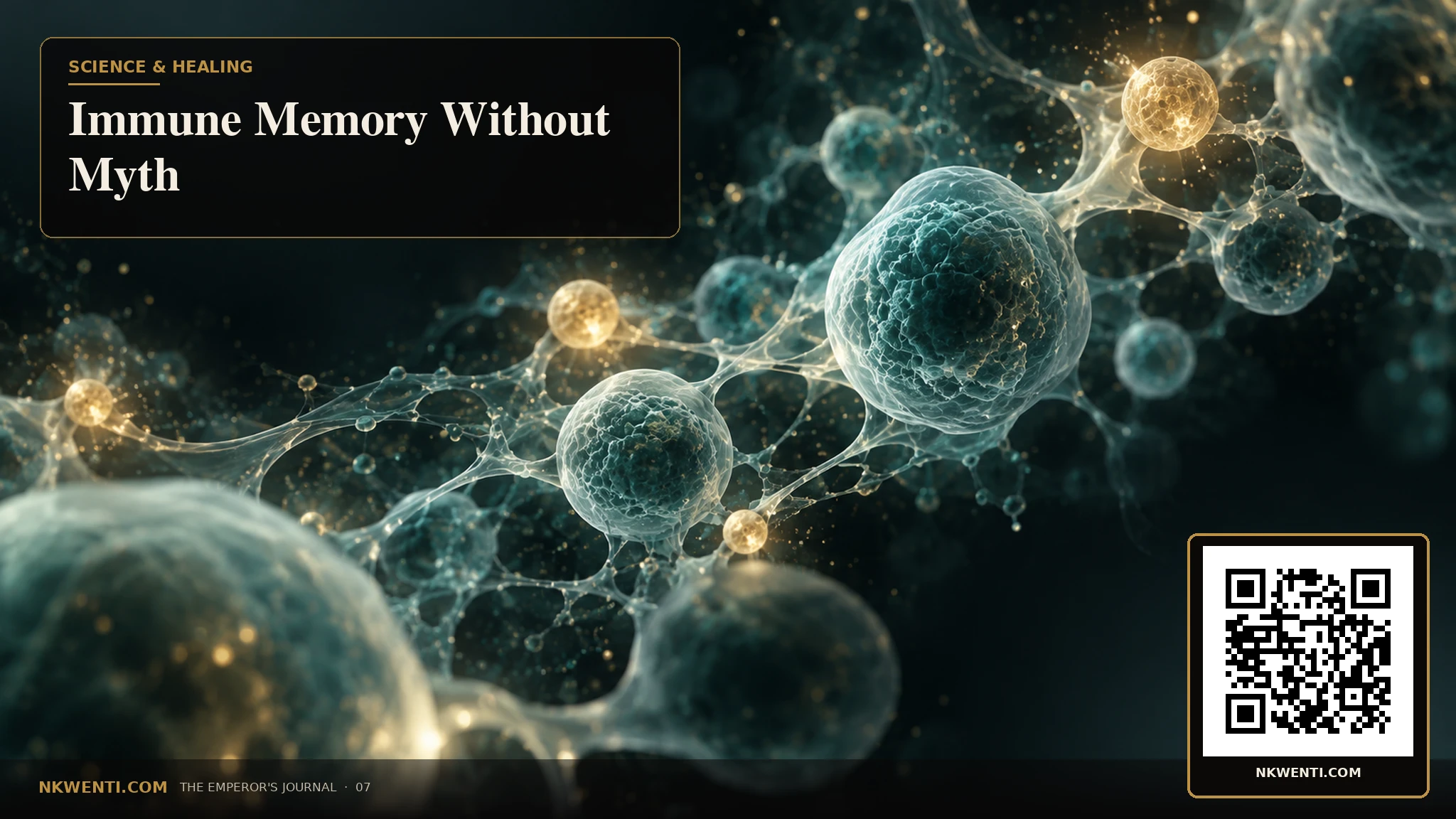
The immune system remembers, but not in the way a mind remembers a face. Its memory is distributed across cells, antibodies, tissues, and patterns of readiness created by prior exposure.
When the adaptive immune system encounters an antigen, selected B and T lymphocytes can multiply and specialize. Some participate in the immediate response. Others persist as memory cells. On later exposure, those cells may respond more quickly or effectively than they did the first time. Vaccination uses this capacity by presenting antigens—or instructions for producing an antigen—without requiring the full consequences of the disease itself.
Memory is specific and variable
Immune memory is not a generic reservoir of “strong immunity.” It is shaped by the particular antigen, vaccine platform or infection, number and timing of exposures, age, health, medication, and individual biology. Antibody levels may decline while other elements of memory remain. For some diseases, protection is long-lasting. For others, boosters are needed because immunity wanes, the pathogen changes, or a higher level of circulating protection is required.
This complexity is easily flattened into myths. One myth says natural infection is always superior because it is “real.” Infection can produce immunity, but it also carries the unpredictable risks of the disease. Another myth imagines that vaccination creates perfect protection. No vaccine is perfect, and effectiveness varies by outcome: preventing infection is not identical to preventing severe disease.
A system, not a warrior
Militaristic metaphors can be useful, but they hide as much as they reveal. Immunity depends on recognition, communication, regulation, tissue barriers, and restraint. An immune response that is too weak can fail to control infection; one that is misdirected or excessive can damage the host. Health is not simply maximum activation.
Recommendations also change as surveillance, population risk, pathogen evolution, and product evidence change. That is not proof that science has failed. It is what an evidence-responsive system looks like when its subject is moving.
Immune memory is preparation, not invulnerability.
A mature understanding of vaccination leaves room for both confidence and limits. Vaccines train biological recognition and can reduce the harm of preventable disease. They do not remove uncertainty from life. The honest promise is not a flawless shield. It is a better-prepared system meeting a known threat.
Sources
Evidence-aware writing. This is not medical advice, diagnosis or treatment. References and disclosures will appear here as the science archive grows.