Bone Is Living Tissue
The skeleton is not a permanent scaffold. It is living tissue that is continually removed, rebuilt, loaded, nourished, and changed by time.
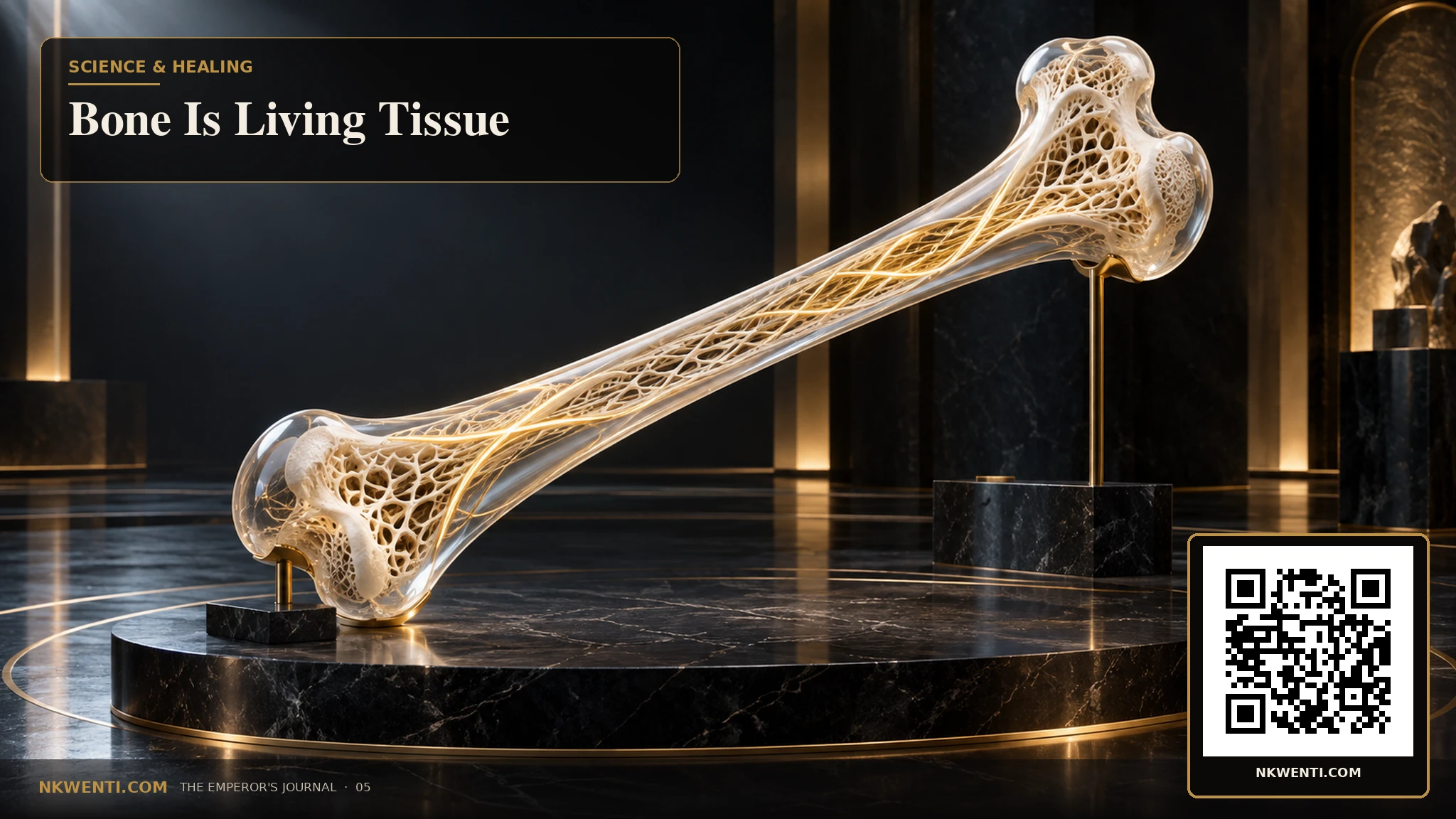
A skeleton appears fixed because bone survives us in photographs, museums, and metaphor. We use it as the image of permanence. Biology tells a more active story.
Bone is living tissue composed of a collagen framework strengthened by mineral. Its cells participate in continual remodeling. Osteoclasts remove older or damaged bone; osteoblasts form new matrix that mineralizes; osteocytes embedded within bone help coordinate responses to mechanical conditions. The process is neither demolition nor construction alone. It is renewal through both.
Strength is architecture
Bone strength is not captured by density alone. Geometry, microarchitecture, material quality, accumulated damage, and the likelihood of falling all contribute to fracture risk. A scan is valuable, but like every measurement, it belongs in context. Age, prior fractures, family history, menopause, medication exposure, nutrition, smoking, alcohol, mobility, and medical conditions can change the interpretation.
Mechanical loading is one signal bone receives. Weight-bearing and resistance activities can support bone and muscle, while inactivity and unloading can contribute to loss. But exercise advice must fit the person. Someone with osteoporosis, balance problems, pain, or a recent fracture may need a tailored plan rather than an internet challenge designed for a different body.
Nutrients are necessary, not magical
Calcium and vitamin D matter to bone biology, but supplements are not universal insurance. Needs vary with diet, age, absorption, health conditions, and medication. More is not always better, and a supplement cannot replace evaluation of recurrent fractures or other risk factors. Protein, overall nutrition, physical activity, and fall prevention belong in the same conversation.
Bone changes quietly. Osteoporosis is often called a silent disease because a fracture may be the first obvious sign. That silence makes prevention and appropriate screening important, especially when risk is elevated. It also makes exaggerated promises dangerous: no food, supplement, exercise, or hormone guarantees that a fracture will never occur.
The skeleton is a record of forces, materials, cells, and time.
To think of bone as living tissue changes the emotional shape of care. We stop treating the skeleton as a passive frame that simply wears out. We begin to see a responsive organ system—capable of adaptation, vulnerable to imbalance, and deserving of attention before damage becomes the only language it can use.
Sources
Evidence-aware writing. This is not medical advice, diagnosis or treatment. References and disclosures will appear here as the science archive grows.