The Tyranny of Being Impressive
A life organized around admiration eventually mistakes the audience for the self.
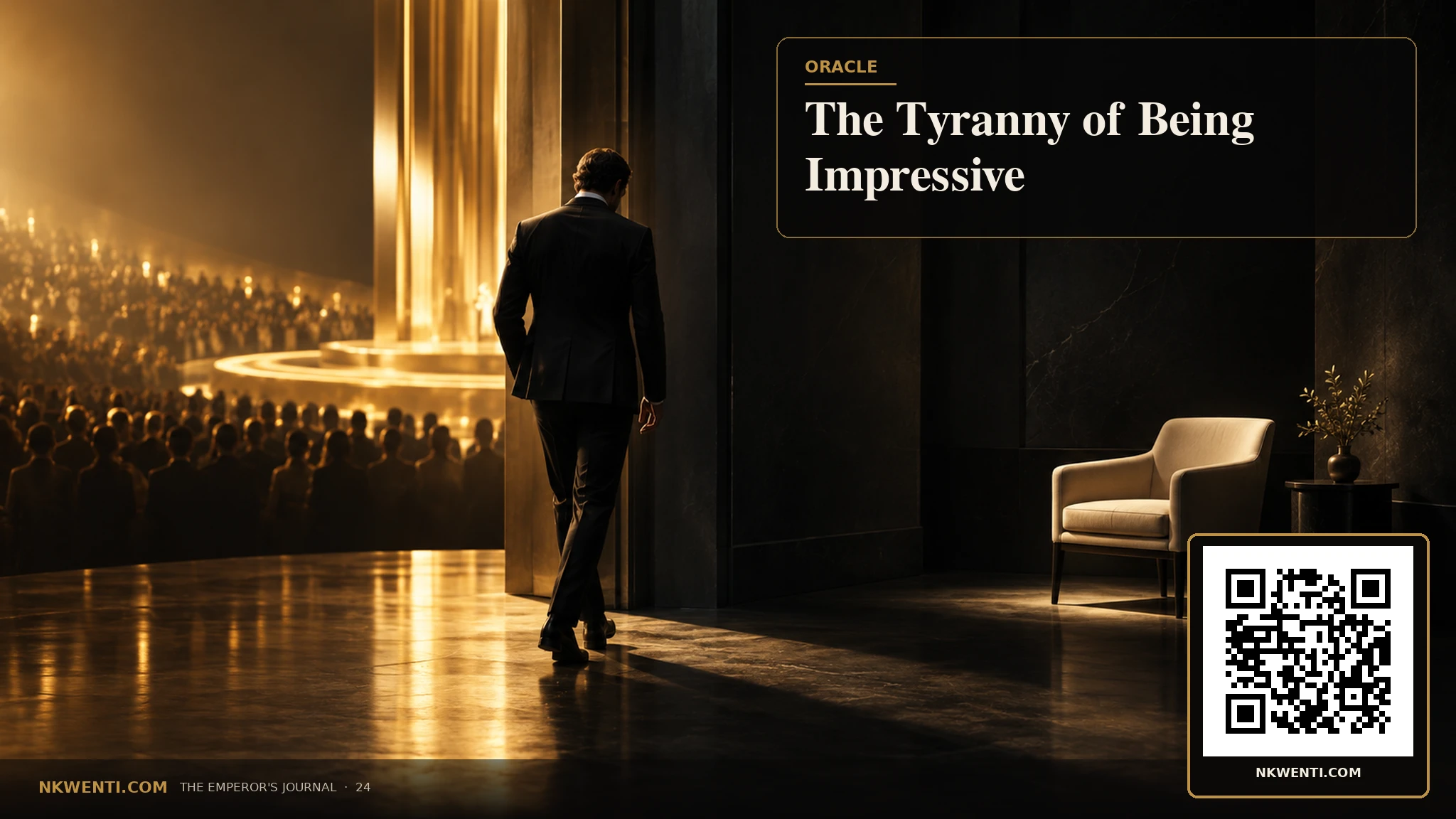
To be impressive is to produce an effect in another person.
There is nothing inherently corrupt in this. Mastery is beautiful. A precise argument, a generous building, a difficult piece of music, a company that solves a real problem—these things deserve admiration.
The danger begins when admiration becomes the instrument by which we verify our own existence.
The audience enters the room
Once the audience is installed inside us, no private act remains private. Rest becomes a strategy for later performance. Reading becomes evidence of intelligence. Generosity requires a witness. Even suffering is edited for meaning before it has been felt.
The impressive life may expand while the inhabited life becomes smaller. We know how the room sees us and lose contact with what the room cannot see.
Admiration is pleasant light. It is a dangerous sun.
The tyranny is subtle because it rewards its subject. Doors open. Invitations arrive. People repeat our words. The prison has excellent acoustics.
What cannot be displayed
Many of the acts that keep a life intact are resistant to spectacle: admitting confusion, changing a position, caring for a person who cannot advance us, doing a task beneath our title, allowing a day to be ordinary.
These acts may reduce our impressiveness. They increase our freedom.
A person who no longer needs every room to confirm them can finally receive correction. They can make work that risks misunderstanding. They can love without turning intimacy into a mirror. They can leave a role whose prestige has begun charging rent in the soul.
The sovereign question
Before the next performance, ask: if no one could know I had done this, would the act still belong to the life I want?
The answer need not always be yes. Public work is public. Reputation matters. We owe communities evidence of our commitments. But if the answer is never yes, we have outsourced identity to applause.
Build what deserves to be seen. Practice until excellence becomes possible. Receive praise without pretending indifference.
Then return to the room where no one is watching and make sure a person still lives there.