The Crown and the Mirror
Authority reveals less about what a person can command than about what they are still willing to see.
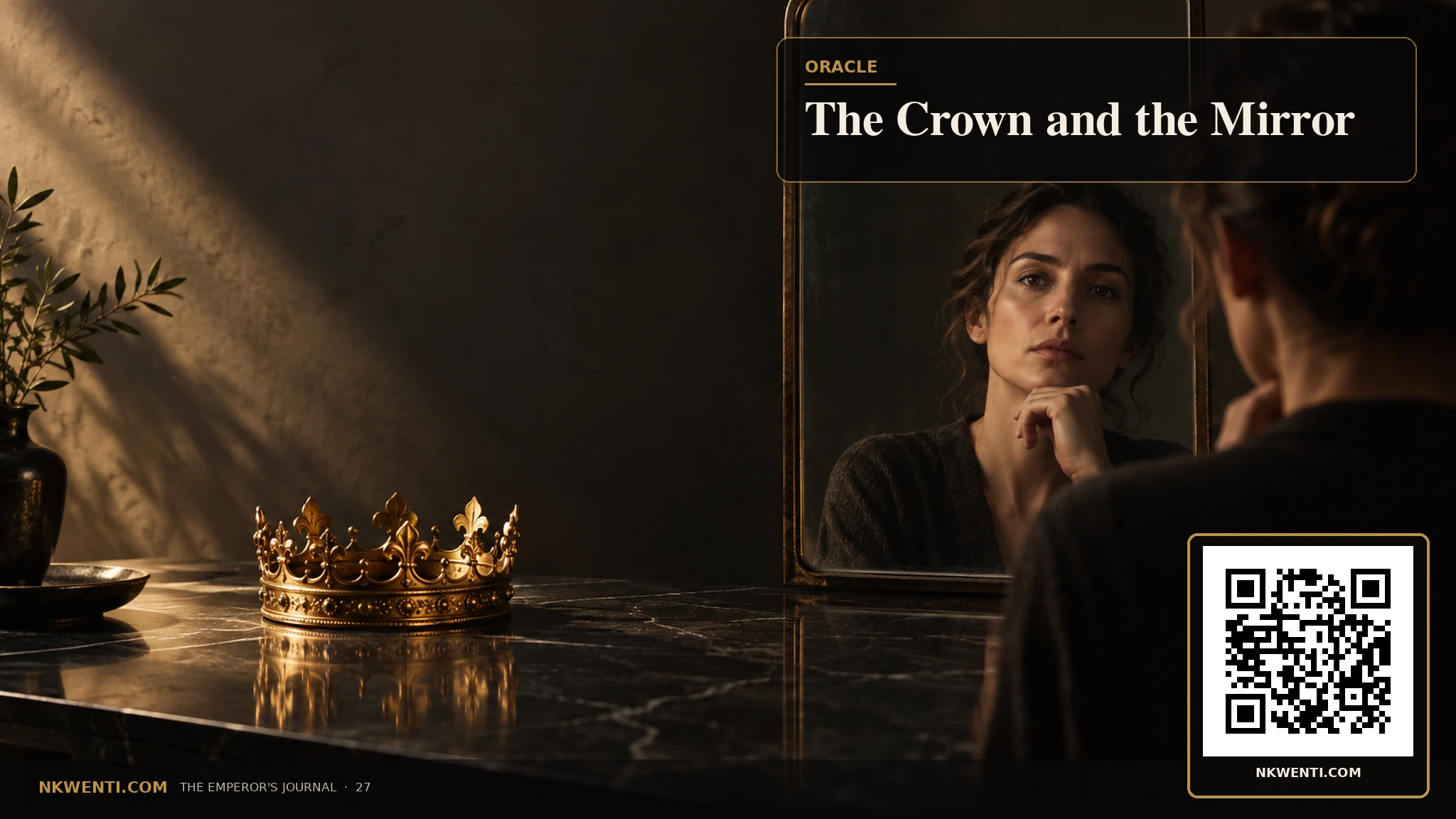
A crown changes the mirror before it changes the face.
People begin to soften what they reflect. They remove the fatigue, the contradiction, the small cruelty that would once have been named by a friend across an ordinary table. The powerful person concludes that leadership has improved them when leadership has merely improved the lighting.
The edited reflection
Authority attracts translators. Failure becomes “timing.” Fear becomes “vision.” Isolation becomes “focus.” Each word contains enough truth to protect the lie beside it.
This is why character under power cannot be measured by the number of people who agree. Agreement may be loyalty, fear, convenience, dependence, admiration, or exhaustion. The leader needs evidence that can survive the leader’s preference.
The first privilege of power is not obedience. It is insulation from consequence.
A responsible ruler—of a company, family, institution, or self—must therefore build routes by which consequence can travel back upstream. Who can say no? Who can show the cost without being punished for disloyalty? Whose absence from the room changes the conclusion?
A mirror with no salary
The best mirror may be a measure that cannot flatter: staff turnover, promises missed, time taken from family, complaints resolved rather than buried, the quality of decisions made when the leader is absent.
Numbers can also be manipulated. No instrument removes the need for courage. A mirror is useful only if the person standing before it has not already decided what must appear.
Wearing authority lightly
Humility is not theatrical self-doubt. A leader who constantly declares unworthiness may still require everyone else to provide reassurance. Humility is structural: creating conditions where correction can occur, sharing credit, naming uncertainty, and accepting that expertise does not rise automatically with rank.
The crown is not proof of wisdom. It is an obligation to keep wisdom reachable.
At the end, authority asks a simple question. Did power enlarge the truth available to the room, or did it train the room to protect power from truth?
Place the crown on the table. Stand before the mirror without attendants. Look until the reflection no longer needs permission to speak.