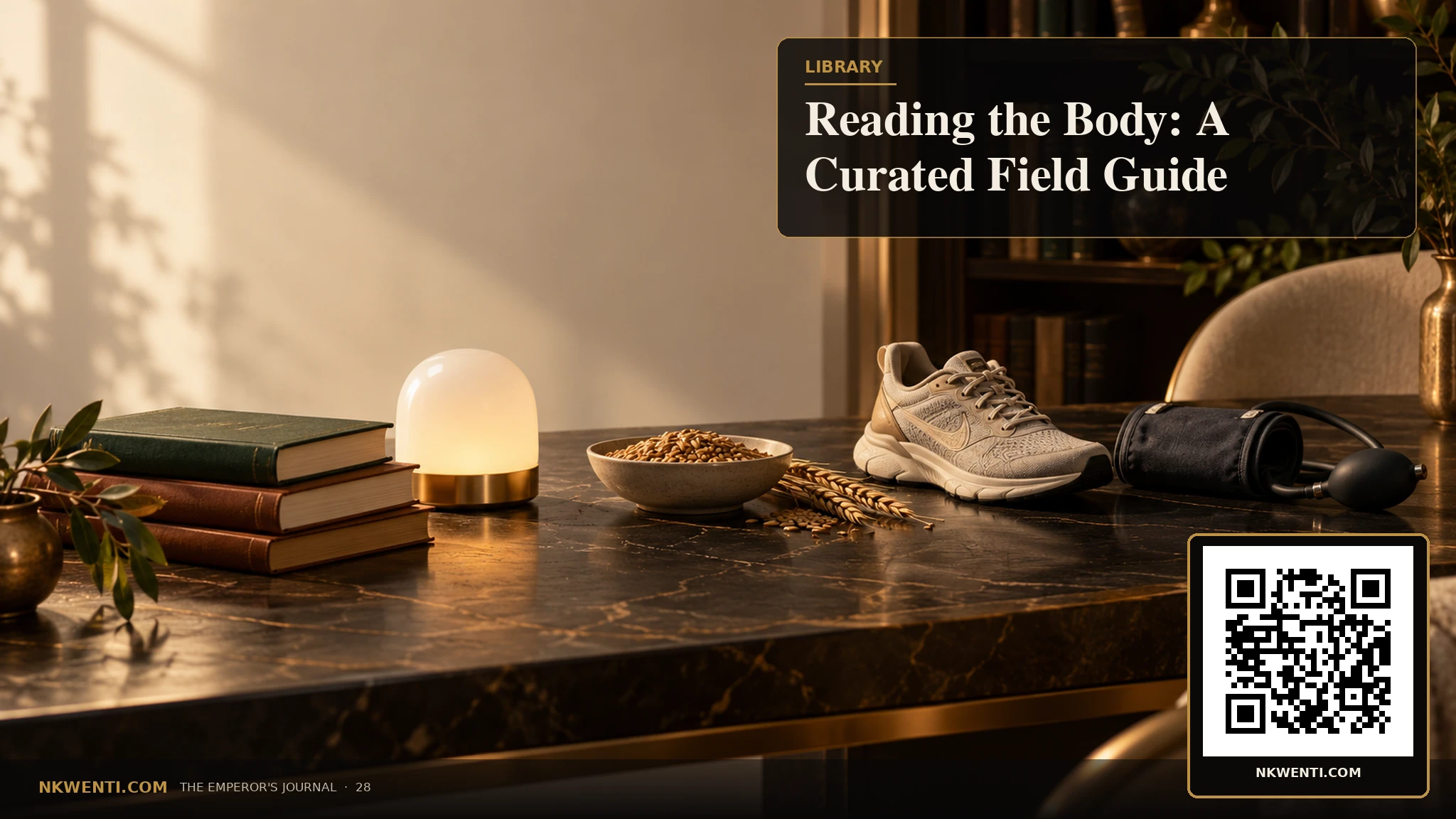
Reading the Body: A Curated Field Guide
A guided shelf for learning how sleep, movement, nutrition, stress, and measurement become one embodied story.
The body is often introduced by department: heart, hormone, muscle, brain, gut. Specialization makes knowledge possible, but a reader can lose the organism while studying its parts.
This collection is designed as a path rather than a pile. Begin with sleep and circadian timing to understand that physiology occurs in time. Continue to physical activity to see how repeated movement shapes capacity. Read about nutrition and the gut without reducing food to a cure. Then study blood pressure and kidney testing as examples of measurement that becomes meaningful only in context.
How to use the shelf
Read one domain at a time. Keep a page for three columns: what is well established, what remains uncertain, and what would require individual clinical interpretation. This prevents an interesting mechanism from becoming a personal diagnosis.
Return to the sources when a claim feels unusually precise or profitable. Ask whether evidence comes from cells, animals, observational studies, randomized trials, or clinical guidance. Each can matter; they do not answer the same question.
A field guide, not a treatment plan
The purpose of this collection is scientific literacy. It cannot account for an individual’s symptoms, medications, history, or examination. Use it to improve questions and conversations, not to replace qualified care.
The body becomes more understandable when systems are connected without pretending complexity has disappeared.