Attention Is a Form of Citizenship
What we notice becomes part of the world we permit, protect, reward, and eventually inherit.
Before a society decides what it values, it decides what it can bear to notice.
Attention appears private because it happens behind the eyes. Yet entire systems compete for it, purchase it, measure it, and shape themselves around its habits. What receives sustained attention gains visibility. What remains unseen can be neglected without the discomfort of a witness.
The politics of the ordinary gaze
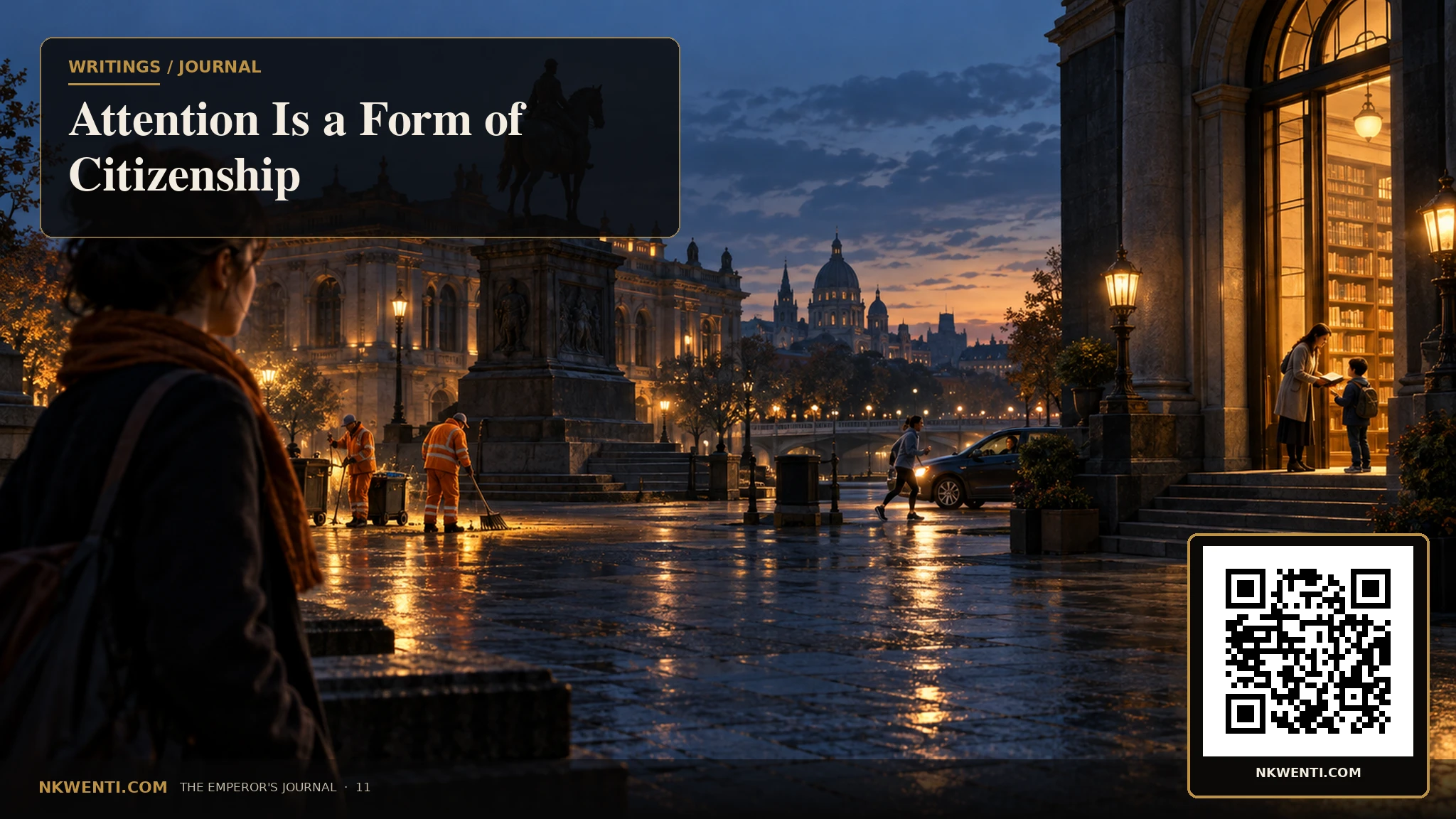
Citizenship is usually described through laws, votes, taxes, and rights. It also lives in smaller acts of perception. Do we notice who cleans the room after the important meeting? Do we hear the person whose accent makes the room impatient? Do we recognize when convenience depends on someone else absorbing risk?
Attention alone does not create justice. Watching suffering can become entertainment; awareness can become a performance that leaves structures untouched. But action without attention easily serves the wrong problem. We cannot repair what we have trained ourselves not to see.
The attention economy complicates this duty. Outrage is efficient. It can be refreshed every minute, requires little context, and turns certainty into a social reward. Meanwhile, slow harms—poor infrastructure, caregiver exhaustion, soil depletion, administrative cruelty—struggle to compete with the spectacular.
A society becomes vulnerable wherever its attention can be cheaply redirected.
Refusing manufactured urgency
To reclaim attention is not to withdraw from the world. It is to become harder to manipulate within it. We can ask who benefits from our alarm, what evidence is missing, what happened before the clip began, and which consequence will still matter after the trend has passed.
This requires practices, not wishes: reading beyond headlines; returning to local institutions; listening long enough for a person to become more than an example; learning the names of the systems that shape housing, health, education, and work. Attention matures when it can remain present after novelty leaves.
The world made visible
There is tenderness here too. The neighbor’s garden. The librarian who remembers a child’s question. The bus driver waiting for the person running in the rain. If we notice only crisis, we surrender the evidence that cooperation already exists.
Citizenship needs a gaze capable of holding both wound and repair. It must see what is being taken and what is being built. It must refuse the comfort of innocence without accepting the paralysis of despair.
Every day, our attention casts small votes. It tells creators what to make, institutions what can be hidden, and other people whether their lives register in the shared world.
To pay attention is not the whole of civic life. It is one of its beginnings.