A Map Drawn After the Journey
We often explain the past with a clarity that did not exist while we were living it.
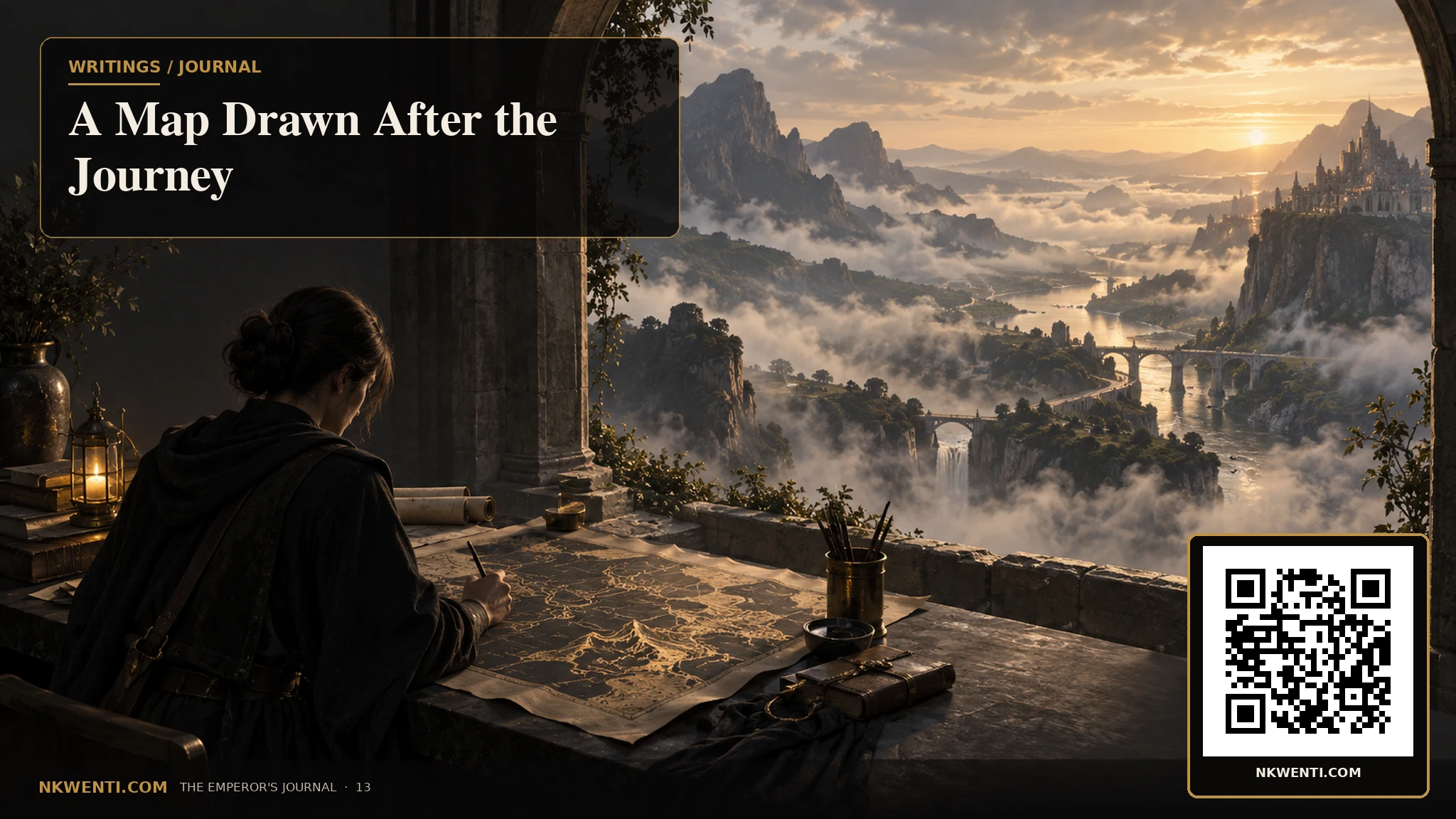
After the journey, the road becomes a line.
We point to the beginning, circle the disaster, underline the lesson, and draw an arrow toward the place we eventually arrived. The map is coherent. The life was not.
While we were living it, there were mornings with no direction, decisions made from incomplete information, and exits we recognized only after passing them. Memory edits weather. It shortens detours. It gives symbols to days that felt like nothing more than endurance.
The mercy and danger of narrative
We need stories. A narrative lets experience become communicable. It helps pain enter language and allows wisdom to travel farther than the person who paid for it. Without some structure, the past remains a room full of unlabeled boxes.
But the story can become too clean. We may begin to believe that survival was evidence of a plan, that every wound was necessary, or that people who have not yet found an ending simply failed to learn the lesson.
Not every loss was secretly a gift. Not every delay protected us. Some events were unjust, some choices were mistakes, and some outcomes could easily have been otherwise.
Meaning can be made from suffering without claiming that suffering was assigned.
Leaving uncertainty on the page
An honest map includes blank regions. It marks the bridge that held and the path we still do not understand. It acknowledges the strangers, accidents, privileges, and acts of care without which the journey would have ended differently.
This humility changes how we speak to those still lost. Instead of handing them our route as a command, we offer it as evidence: here is where I was; here is what helped; here is what harmed; here is what I cannot know about your terrain.
The map becomes companionship rather than prophecy.
The person who drew it
Looking back also reveals how much the cartographer has changed. The self drawing the map possesses language the traveler did not. That later wisdom should not become contempt for the earlier person who moved through darkness with fewer tools.
We can revise our understanding without mocking our survival. We can name the wrong turn and still honor why it looked like shelter.
Perhaps maturity is not producing a perfect account. It is learning to tell the story with enough clarity to be useful and enough uncertainty to remain true.
The road was never a line. The map is a gift we make afterward—beautiful, partial, and marked by the hands that finally found a place to stand.